
When operations stall, you don't need a framework. You need someone who's sat in your chair.
Operations consultancy and interim leadership for manufacturers.
35 years running operations. Apprentice to COO.I protect delivery, margin and cash when it matters.




35+
YEARS IN GLOBAL
MANUFACTURING
£150M +
VERIFIED SAVINGS
22,000
PEOPLE IN LARGEST REMIT
6
GLOBAL BUSINESSES

WHO I HELP
I work with UK and European manufacturers — typically £40m to £1bn, often PE-or VC-backed — in aerospace, regulated engineering and industrial manufacturing.Usually I get the call when something isn't holding. Delivery has slipped and the fixes aren't sticking.Margin is leaking somewhere the reports can't quite explain. A site is underperforming and the board wants a straight answer on why. Or you've got an operations gap - no COO in the seat, or one who needs support - and you can't wait six months for a permanent hire.That's where I come in. Not to write a strategy deck and leave - to get into the operation, find what's actually wrong, and build a system that still holds after I've gone.

HOW I'LL SUPPORT YOU
Three ways in, depending on what you need.



Diagnostic & Assessment
If you need to know what's really going on, I run a diagnostic - a fast, honest read of the operation and where delivery, cost and cash are actually being won or lost.
Advisory & Strategic
If you know the problem and need someone to run it, I go in as an interim COO, setting the operating strategy and driving it on the floor until it holds.
Learning & Development
And if the gap is capability, I build it - coaching your leaders and teams.So the improvement doesn't leave when I do.
There are a number of product or service offerings that can be tailored to your needs.
IT'S ALL ABOUT THE RESULTS
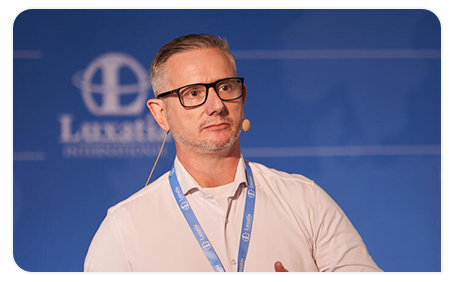
Let's look at your problem — and how we solve it together.
If 35 years in operations taught me one thing, it's that your people are your biggest asset. Tell me what's not holding, and let's have a straight conversation about it.
CLOSING THE GAP
"We knew parts were going missing; what we couldn't see was why. Pete built the picture from data we already had, put the handovers in the open and gave the teams numbers they trusted. On-time delivery went from 40% to over 90% in six months, with no new systems. The weekly rhythm is still running now he's gone, and that's the bit that matters."

Everything I do comes back to one thing: an operation that performs without me standing over it.
Most clients come in through a diagnostic, move into delivery, and stay for the capability that makes it last.Here's the full picture.
WHAT I DO
Operations consultancy and interim leadership for manufacturers.
MY PROCESS - STEP BY STEP

Service 1
ASSESS
Every engagement starts here. A Diagnostic Week on site, a Strategic Assessment for the board, or a Process Mapping Workshop with the people who run the line. I walk the floor, read the numbers and listen. You get findings you'll recognise, a costed improvement plan and a straight answer on what's worth doing first. No 80-page report.
Service 2
FIX
Delivery is late, margin is slipping and the customer is asking questions. I've had that phone call. I find the real constraint, stabilise flow and rebuild schedule adherence, then go after cost.
The turbine project I led at Rolls-Royce recovered delivery from 15% to 95% over two years. Where the business needs someone alongside the leadership team for a period, I work embedded, to a defined remit and measured outcomes.
SERVICE AREAS
Service 3
RUN
Improvement that doesn't outlast the consultant wasn't improvement. Run is the operating system that holds it: daily management on the shop floor, performance management for the leadership team, Hoshin to turn strategy into Monday morning actions, and S&OP so sales and production stop surprising each other. Built with your people, run by your people, and still working after l leave.
Service 4
BUILD
Systems need people who can run them. The Lean Academy trains practitioners at every level, the Production Leader programme develops first-line leaders in aerospace and regulated engineering, and the CI Specialist Assessment tells you whether the improvement team you have is the one you need. Coaching happens on the floor, not in a classroom.
Service 5
PRIVATE EQUITY
Operations is where the value creation plan gets made or lost.
Before the deal, I run operational due diligence: capacity, flow, cost and the strength of the leadership team, in two to four weeks. After it, the 100-day plan, with delivery, margin and cash as the levers.
Through the hold, whichever of the four families the portfolio company needs. I've worked with manufacturers from £40M to Elbn, saved over $150M across six businesses, and I know what an operations story has to look like at exit.
ENGAGEMENT MODELS
ADVISORY
Light Touch
By the hour by the day.
I sit with you and your leadership team (either virtually or in person) look at the numbers, walk the floor and tell you what I see.Right for a capable team that wants an experienced second opinion.Or a board that wants independent eyes on operations.You keep ownership. I bring 35 years of pattern recognition and a plan you can act on Monday.
EMBEDDED
Part Time
Two to three days a week inside the business, working to an agreed remit and measured outcomes.Typical remit: install daily management, fix delivery, recover margin, or cover an operations gap while you hire.Delivered as a defined programme with milestones, reviewed quarterly.I work through your people so the gains hold. Most programmes run six to eighteen months.
PROJECT
Fixed Scope
A defined problem, a defined outcome, a fixed price. Strategic Review, Hoshin deployment, process mapping, leader maturity assessment.Diagnostics run two to four weeks and end with findings and a costed improvement plan.Larger projects carry milestones and targets agreed up front. The turbine project I led at Rolls-Royce recovered delivery from 15% to 95% over two years. Same discipline, scoped to your problem.
PROJECT
Portfolio
Operational due diligence before the deal, the 100-day plan after it, and scoped support through the hold.I work with portfolio manufacturers from £40M to £1bn across aerospace, regulated engineering and industrial manufacturing.Over $150M saved across six businesses.Delivery, margin and cash are the levers.Exit readiness is the target from day one.
CLOSING THE GAP
"We thought we had daily management. Pete showed us we had a weekly review with a different name on it. Rebuilding the boards to look at the next 48 hours instead of yesterday, and getting leaders on the floor to clear blockers, changed our mornings completely. Escalations to my team have more than halved and the tiers run themselves. It took persistence, and it stuck."

REAL RESULTS
"Pete is an ambassador, champion and encourager of all things continuous improvement. Focusing on collaboration between teams. His aim has always been to connect c-suite executives to their colleagues at all levels of the business, providing businesses with the ability to capitalize on the network of ideas provided by the talent of it's operators with the decision making and strategy of it's leadership" -- Cameron Calvert, Business Improvement Manager - David Brown Defence
CASE STUDIES
CASE STUDY 1
Cable-laying equipment
"We knew parts were going missing; what we couldn't see was why.Pete built the picture from data we already had, put the handovers in the open and gave the teams numbers they trusted.On-time delivery went from 40% to over 90% in six months, with no new systems.The weekly rhythm is still running now he's gone, and that's the bit that matters."
CASE STUDY 2
Engineering and maintenance
"We thought we had daily management. Pete showed us we had a weekly review with a different name on it.Rebuilding the boards to look at the next 48 hours instead of yesterday, and getting leaders on the floor to clear blockers, changed our mornings completely.Escalations to my team have more than halved and the tiers run themselves. It took persistence, and it stuck."
CASE STUDY 3
Blade machining
"We had a capex case ready for new machines. Pete asked us to prove we needed them first.He found the one work centre setting the pace for the whole factory, and within six months we'd taken over 20% out of cost on tooling and discipline alone, ahead of a competitor who'd already caught us.The board backed the investment after that, to double the capacity rather than replace it.
We're now running the same approach in other departments."
WHAT PEOPLE ARE SAYING
Pete is an ambassador, champion and encourager of all things continuous improvement. Focusing on collaboration between teams.His aim has always been to connect c-suite executives to their colleagues at all levels of the business, providing businesses with the ability to capitalize on the network of ideas provided by the talent of it's operators with the decision making and strategy of it's leadershipCameron Calvert, Business Improvement
Manager, David Brown Defense
When I first met Pete, he was architecting an entire lean business system, including communication plans for a large, global team, and a well thought out implementation plan.
The depth of his knowledge and experience brought him instant credibility to a leadership team not familiar with lean concepts or a rigorous business system.Pete's leadership was key to success in this multi-cultural environment.Mike Coubrough, Vice President Ops,
TE Connectviity
What truly distinguishes him is his pragmatic approach.
He focuses on what works. Rather than getting lost in theory, he assesses complex challenges quickly, identifies the highest-impact actions, and executes with clarity and discipline.He consistently drives measurable results while maintaining alignment with broader organizational objectives. I strongly recommend Pete without reservation.Patrick Mafféis, Senior Advisor/ Senior
Consultant/Board
Pete consistently challenged assumptions, encouraged innovative thinking, and supported the development of the people around him.Whether we were streamlining processes, implementing change programmes, or navigating cross-functional priorities,
Pete is a leader who genuinely cares about the work, the people, and the long-term health of the organisation.Peter Stephenson, Operational Excellence
Manager, Timpson Group
COMPANIES I'VE WORKED WITH




CLOSING THE GAP
"We had a capex case ready for new machines. Pete asked us to prove we needed them first. He found the one work centre setting the pace for the whole factory, and within six months we'd taken over 20% out of cost on tooling and discipline alone, ahead of a competitor who'd already caught us. The board backed the investment after that, to double the capacity rather than replace it. We're now running the same approach in other departments."

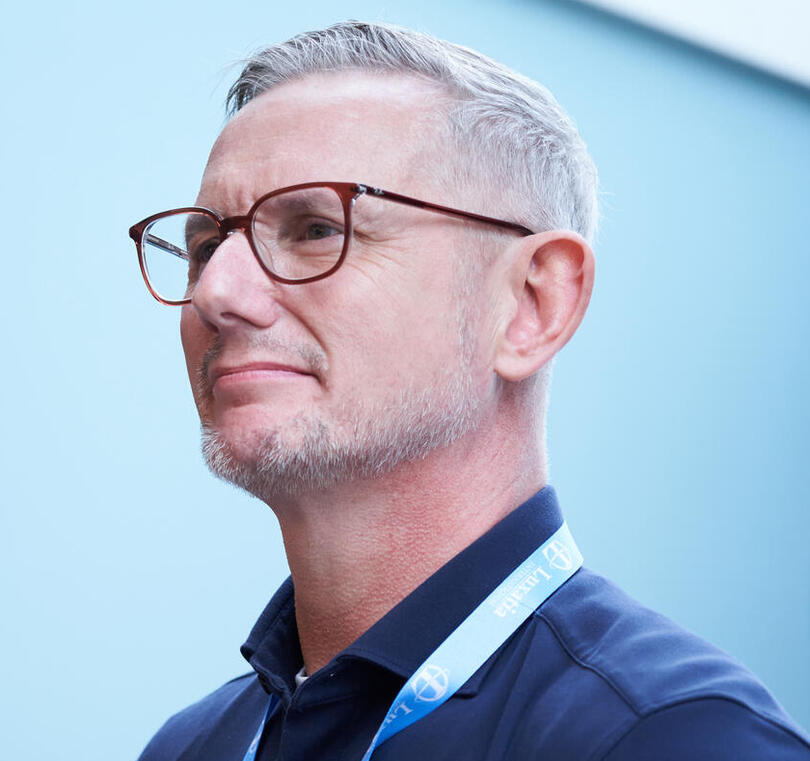
ABOUT PETER
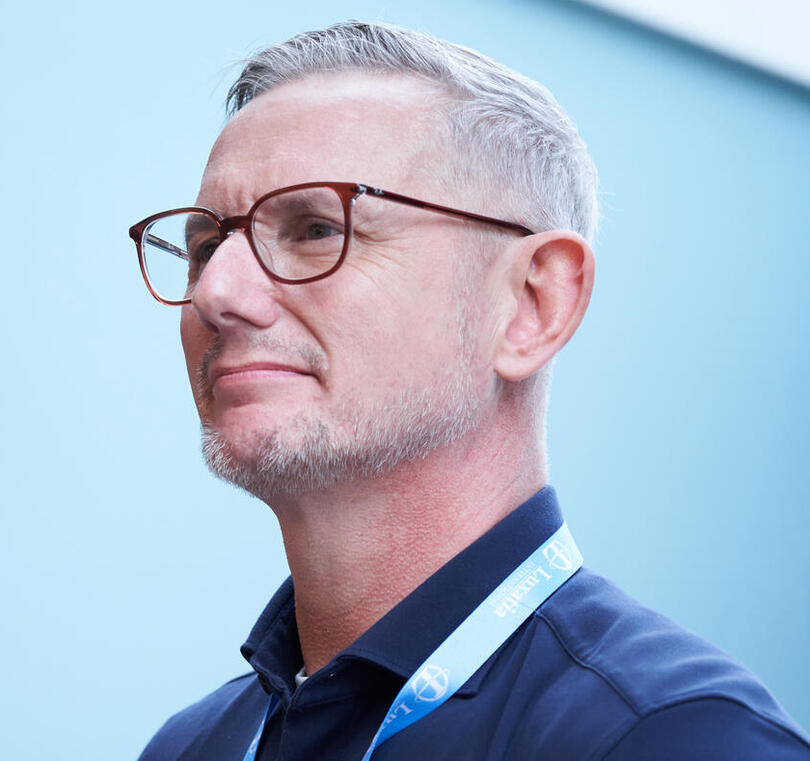
Your delivery board is red and nobody can agree why. Or your margin is going somewhere and the reports say it shouldn't be.
That's the conversation I'm useful in.I'm not a consultant who learned this from a book. I spent 35 years running manufacturing operations before I started advising anyone - craft apprentice at Rolls-Royce, COO by the end of it. I've set operating strategy at group level andI've been on the shop floor at 6am making it work. Most people have done one or the other.At Rolls-Royce I led the turbine project that recovered customer on-time delivery from 15% to 95% over a two-year period, and spent six years running supply chain improvement across the business. Not a workshop. Two years of getting a system to hold.Since then: Alstom, GE, ABB, Datamars as COO, Sulzer, TE Connectivity. I've run and worked inside organisations of every size - from six factories to over fifty, and from £100m in sales to well over £15bn. I've held the P&L when the numbers went red.
That's what clients buy. Not a framework - someone who has sat in their chair.
CAREER BACKGROUND
PETE MORLAND CONSULTING • FOUNDER • 2025 - present
Operational turnaround, daily management and leadership coaching for UK and European manufacturers

VALUES AND APPROACH


AND IN MY FREE TIME...
I'm a gym bunny, I also have an extreme love of Hi-Fi.
I love a good blast on a video game or two.I also love spending time with my family and get out and about on my bike when I can, or I can be seen taking my pet labrador Otis out for his much needed long walks.
CLOSING THE GAP
“Pete delivered not only an immediate impact, but a process and change in thinking that has been sustained long since him completing this project.”


Cable Laying Equipment
On-Time Doubled, Losses Designed Out — and Not a Penny on New Systems
Parts were vanishing between the warehouse, the assembly bays and the road in between — and with them, the confidence that the next build would have what it needed.
The Situation
A specialised engineering business — a designer and builder of underwater cable-laying equipment — was losing parts across its operation. Components went missing inside the warehouse, on the assembly areas, and in transit between sites. For a business building complex, high-value equipment to exacting requirements, missing parts meant delayed builds, duplicated spend and mounting uncertainty about what was actually on hand. The losses were real — but the bigger problem was that no one could see where, or why, they were happening.
The Diagnostic
The work began alongside the COO, in the data. Rather than impose a new system, the diagnostic gathered the metrics that already existed and defined new KPIs for each step of the process — built on systems the C-suite already used and trusted, so the numbers carried weight from day one.Conversations across the business, with operators and managers alike, exposed the root issue: the teams were siloed.Parts were handed from one team to the next with no acknowledgement and no record — accountability evaporated at every boundary.To find the root cause rather than chase symptoms, the new measures were framed as a balanced scorecard covering safety, response time, on-time delivery, cost per pick, and stock losses and gains. Reviewed with the teams, it turned a vague sense that “things go missing” into specific, evidenced findings:
On-time delivery from the distribution centre was known to be poor — but what hadn’t been communicated was that distribution was given just 48 hours to pick and pack to the build requirement, with no forecast of what was coming.Categorising stock losses and gains against an ABC/XYZ matrix showed the worst offenders weren’t the expensive items — they were low-value nuts, bolts and washers, managed in the same systems and with the same ceremony as parts costing more than £10,000.Benchmarked against best in class, the cost per pick was running at over £100 — roughly 50 times higher.
The Solution
The data pointed at process, but the fix was about ownership. Where parts crossed between teams, no one had owned the handover — so the first moves were about making accountability visible and giving everyone the same picture to work from.A quick-hit accountability fix: an inventory log on the transport lorry, with every part checked in and out and signed for by a named receiver.
The balanced scorecard made live — safety, response time, on-time delivery, cost per pick and stock losses and gains, visible to the teams week by week.A weekly review that brought operators and leaders around the same numbers to agree and own the improvement actions.
Focused workstreams across systems, material handling, organisation design, planning and daily management — each aimed at a root cause the data had exposed.Those workstreams turned the headline themes into concrete change:
New store-keeper roles were created at each material-receipt location, responsible for accurately accounting for stock and moving it to the right place on every production site — and, mindful of the cost pressure, funded entirely from existing headcount.A dedicated C-class parts workstream tackled the biggest source of losses head-on: rather than routing low-value parts through the distribution centre, they would be purchased and vended at the point of use. Working with the purchasing team, a full list of parts was built and scoped for formal commercial enquiries and negotiation.To lift productivity, a process-mapping exercise — run through a high-volume customer — laid bare the physical and transactional workload on the teams. From it, a cell-layout concept was designed with the distribution staff to cut out unnecessary movement while keeping everything needed to pack and despatch within reach.
With the measures trusted and the handovers finally visible, the teams stopped pointing across the gaps and started closing them.
The Impact
The numbers moved, and they moved hard. On-time delivery climbed from 40% to comfortably above 90%.Inventory accuracy improved by more than 500%, lifting overall accuracy to 95% — the untraceable losses that started the engagement all but designed out. And a productivity improvement of over 30% was identified and built into the budget, delivered through people and process alone, with no new systems or automation.Cost per pick was on the same path — down from over £100 and tracking toward the programme’s sub-£50 target, with a longer-term ambition of under £20.Just as important was what stuck. Accountability was now built into every handover, the teams worked to shared KPIs they trusted, and the operating rhythm carried on after the engagement closed. The business didn’t just recover its parts and its productivity — it learned how to hold on to them.
The Results
1) On-time delivery from 40% to > 90%2) Inventory accuracy improved by over 500% — overall accuracy now 95%3) 30%+ productivity improvement banked in budget — people only, no systems or automation4) 6 months from project start to phase 1 completion, handed over to internal team
Customer Feedback
“We knew parts were going missing; what we couldn’t see was why. Pete built the picture from data we already had, put the handovers in the open and gave the teams numbers they trusted. On-time delivery went from 40% to over 90% in six months, with no new systems.The weekly rhythm is still running now he’s gone, and that’s the bit that matters.”
— COO
The Bigger Picture
Missing parts, slipping on-time delivery and runaway picking costs are rarely a warehouse problem — they are an accountability problem hiding in the gaps between teams.Whether you sit in finance, operations, improvement or the chief executive’s chair, if the trend is heading the wrong way, let’s talk.


Engineering and maintenance
Are you controlling the day — or just reviewing it?
Every issue used to land on a senior leader’s desk. Now it’s surfaced, owned and solved on the floor — before the day even begins.
The Situation
A complex, highly regulated aerospace parts supplier. Operations started every day on the back foot. Work got done through effort and heroics, not a system — problems surfaced late, escalated upward, and pulled senior leaders into issues the front line could have owned. There was no shared, forward-looking view of what the day actually demanded.
The Diagnostic
On the floor the pattern was clear: fragmented boards that looked backward, huddles that recapped yesterday, and problems held in people’s heads rather than a system. Capability and commitment were never the issue.The real problem was subtler, and it catches out even experienced leaders. The team was running a performance-management routine — a weekly review of red/green trends — under the banner of daily management. They are two different systems, and one of them was missing.Daily management is short-interval control. At every tier, from the bottleneck work centre up to site, it asks whether the next 24 to 48 hours of schedule will be achieved, what puts it at risk, and what recovery action is needed now — with blockers escalating the same day.Performance management is the weekly cadence above it: working red/green trends, getting to root cause, and driving structured improvement and strategic priorities. The two are linked — daily management surfaces and recovers; whatever it can’t resolve escalates into the weekly problem-solving.The client had the weekly review but had mislabelled it as daily management. So nothing was truly controlling the day.
The Solution
We embedded a tiered daily management system from the front line up:
Boards rebuilt to look forward — today’s plan, what’s at risk, and where help is needed.A real huddle cadence, work centre to site, so problems surface and get owned at the right level — and escalate the same day when they can’t.
Leader Standard Work that put managers on the floor coaching and unblocking, not chasing reports.It didn’t all land first time. The first boards slipped back into reporting, so a second phase reworked them into forward-looking scheduling points — focused only where they mattered, at bottlenecks and critical work centres.Throughout, the real lever was leadership behaviour, not the boards themselves. Full embedding took around 12 weeks of focused effort across six months, to let acceptance build.
The Impact
Mornings changed first. Problems surfaced early and got solved at the right level, escalations to senior leadership fell away, and leaders shifted from firefighting to coaching.Because the teams owned the rhythm, it stayed when we left — and that’s the real prize: not a tidier board, but an organisation that now solves its own problems, day in, day out.
The Results
1) >50% fewer issues escalated to senior leadership2) Daily management embedded across 2 tiers and self-sustaining after handover3) 12 weeks to embed and hand over
Customer Feedback
“We thought we had daily management. Pete showed us we had a weekly review with a different name on it. Rebuilding the boards to look at the next 48 hours instead of yesterday, and getting leaders on the floor to clear blockers, changed our mornings completely.Escalations to my team have more than halved and the tiers run themselves. It took persistence, and it stuck.”
— Operations Director
The Bigger Picture
What makes daily management stick has little to do with the boards — it’s rigour and leadership behaviour. It has to run every single day, with leaders genuinely there to take an escalation the moment a team has exhausted its options: to clear the blocker, not to collect the excuse.That takes real time and relentless consistency to embed — get the behaviours robust and it holds; let them slip and the whole thing quietly fails. If your daily management needs to survive a busy week, that’s the work. Let’s talk.


Blade machining
Are you competing on cost — or just hoping you still are?
A European blade machining factory found its Chinese competitor had already matched its cost. It got more than 20% cheaper in 6 months — with no new capex — by fixing one work centre.
The Situation
The site — sales over £50M — machined turbine blades in a country chosen for its lower cost base. That advantage was gone: a Chinese competitor had reached cost parity and was still improving. Leadership's target: more than 20% cheaper, to unlock further investment in the site.Their initial plan was a multi-million-pound capex on new machine tools. We were engaged by the global leadership team to test whether the same capacity could be found without that spend.
The Diagnostic
Rather than a broad cost-cutting drive, we mapped the flow of blades to find where capacity was actually being lost — not where costs looked highest. A machine utilisation analysis identified the constraint: one work centre setting the pace for the whole factory, where every lost hour was output the site could never recover.
The loss fell into three categories: waiting material, waiting operator, and set-up downtime.
The Solution
We set a strategy to uplift the constraint's capacity by 30% — the ceiling before another work centre became the new bottleneck. Site leadership needed convincing, having backed the capex plan; the data made the case. Each category was tackled directly:Waiting material: buffers were planned at the machine itself so it was always fed, protecting its pace from variability elsewhere in the flow.Waiting operator: breaks were re-timed so an operator was always available on the constraint, within the existing shift pattern — running hours held at 24/5, preserving time for breakdowns and maintenance.Set-up downtime: the main source of downtime, cut two ways — true set-up time reduced using SMED (single-minute exchange of dies), and tooling switched to zero-point fixturing (same datum every time — lock and go). SPC (statistical process control) established the first-off failure rate, giving confidence to start the second component while the first was being inspected.None of this required new machines or capital spend — just knowing which work centre mattered, and being relentless about protecting its running time.
The Impact
Output from the constraint rose sharply within weeks, flowing straight through to whole-factory capacity — no new machines, headcount or floor space needed. Every extra part cost only consumables, not fixed or overhead cost, and demand to fill it was already there waiting — turning the gain straight into cost reduction, past the Chinese competitor's position.Leadership used the evidence to secure further investment — not to replace the capacity freed, but to double it, since demand was abundant and the team had proven they could get the most from their equipment first.
The Results
1) >20% cost-out — decisively ahead of the new lower-cost competitor2) Constraint utilisation up from 60% to - 85%; downtime cut across all three categories3) Additional capacity unlocked with a small investment in tooling4) Delivered over 6 months, within existing shift patterns and overheads5) Approach now being replicated in other departments — further margin expansion in train
Customer Feedback
“We had a capex case ready for new machines. Pete asked us to prove we needed them first. He found the one work centre setting the pace for the whole factory, and within six months we’d taken over 20% out of cost on tooling and discipline alone, ahead of a competitor who’d already caught us.The board backed the investment after that, to double the capacity rather than replace it. We’re now running the same approach in other departments.”
— Site Leader
The Bigger Picture
Most factories cut cost everywhere at once, spreading effort too thin to move the number that matters. Real cost-out means finding the one work centre that sets the pace for everyone else, and staying disciplined about protecting it — a discipline, not a one-off exercise, because the constraint moves once you fix it.Get it right and the factory doesn't just match the next low-cost competitor, it stays ahead. If your cost base needs to survive the next comparison, book a call and we'll talk about where to look first.


Products
Fixed scope. Fixed duration. A price you know before we start.
Six products, in price order, from a one-day workshop to a board-level review. The bars show how much of the organisation each one reaches.Most clients start with the Diagnostic Week and go from there.
01 - FOUNDATION -
Process Mapping Workshop
Your people, your process, mapped as it really runs, and a prioritised action log with named owners by five o'clock. Value stream, SIPOC, spaghetti or swim lane, whichever fits. Built by the people who do the work, so the improvement ideas are theirs.For: a team that knows something is wrong with how work flows and needs a shared picture before it can fix it. Also the fastest way to scope a bigger piece of work.You get: digitised as-is maps; a list of bottlenecks, duplication and gaps; an action log by impact and effort.
From £2,500
02 - CORE - -
Daily management
The operating rhythm that holds performance in place after the improvement project ends. Forward-looking boards, a fixed huddle sequence, leader standard work for every tier, and a problem method that closes actions rather than lists them. Then I coach your leaders until it runs without me.For: sites where improvement keeps unravelling, escalations land on senior desks, and the day is reviewed rather than controlled.You get: a tiered system, cell to site, in live use within 12 weeks; a written standard; leaders who know what good looks like each morning.
From £6,500
For a single cell or work area; department and site
programmes scopea on reques
03 - CORE - -
Diagnostic Week
An honest read of what is holding back delivery, margin and cash, and a prioritised plan to fix it. Boardroom to front line: interviews, floor time, data, then findings your own team has pressure-tested and a roadmap presented on day five. Evidence, not opinion.For: CEOS, COOS and boards who need a straight answer on why a site is underperforming, before they commit to a programme.You get: root causes separated from symptoms; a costed, prioritised roadmap; a clear view of where your data can be trusted and where it can't.
From £15,000
04 - CORE - -
Hoshin Kanri
Breakthrough objectives that reach the shop floor. A facilitated X-matrix, a catchball cascade your teams catch and own, tiered governance, and software that replaces the spreadsheet so every project and KPI is visible in real time. Coaching until it runs without me.For: leadership teams with a strategy that keeps staying in the boardroom.
You get: objectives with a direct line from the shop floor to the long-term goal; ownership built through catchball; problems surfaced early enough to adjust in flight.
From £18,000
05 - ADVANCED - - -
Strategic Review
The gap between what your strategy demands and what you can deliver, closed in one board-ready roadmap.Delivered by two senior executives working the engagement themselves: one on strategy and footprint, one on the factory and supply chain. One integrated answer, co-presented to your board.For: boards and PE-backed leadership teams facing a footprint, capacity, make-versus-buy or performance-mandate decision.You get: a performance-gap analysis; a 12 to 18 month roadmap with a financial case per workstream; a board presentation you can use the same day.
From £50,000
05 - ADVANCED - - -
Leadership Coaching & Mentoring
Coaching for site leaders, plant directors and operations teams, on the floor rather than in a classroom, so the capability stays when I leave. It starts with a short leader maturity assessment, then a plan per leader with leader standard work at its core: what a good morning looks like, how to take an escalation, how to clear a blocker instead of collecting an excuseFor: a capable team never shown what good looks like day to day; a new GM or COO standing up a site; a business that wants the improvement to outlast the consultant.You get: a maturity baseline; a plan per leader; a routine that holds under pressure; fewer escalations, leaders who coach rather than chase.
Scoped after the assessment

